An Interview with Josh Domanski

Josh Domanski is co-writer and designer of the Liminal Horror tabletop role-playing game. You can find his work at https://unenthuser.itch.io/
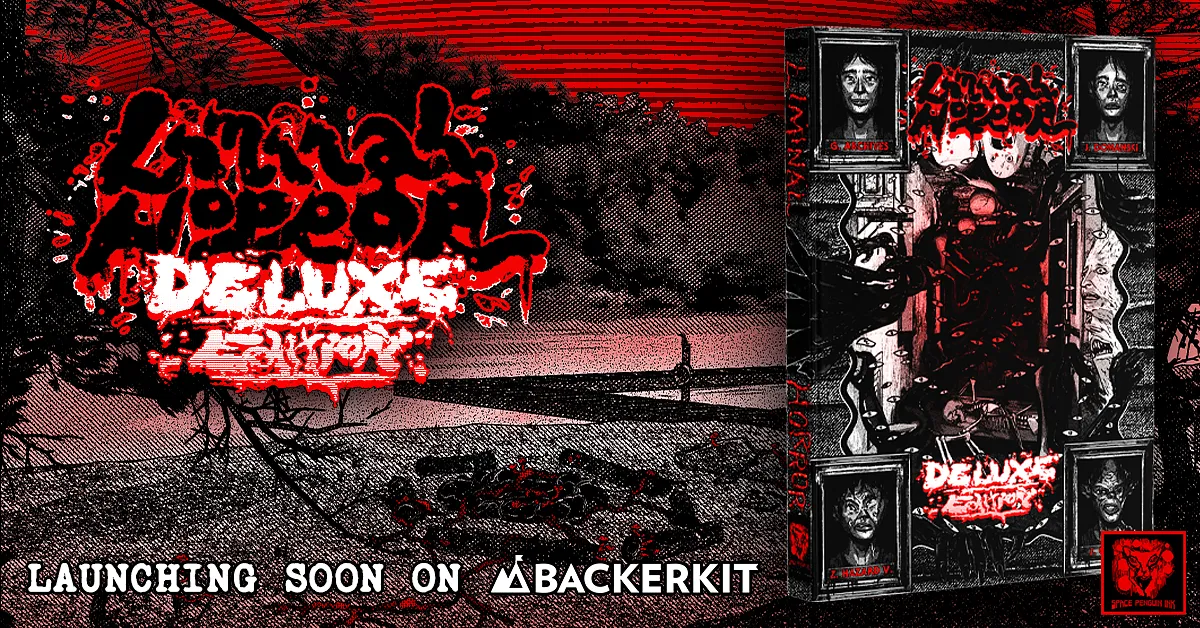
Mario | La Esquina del Rol: Josh Domanski, welcome to La Esquina del Rol! It’s truly a pleasure to have you here. You’re one of the developers and writers of my favorite modern horror RPG; which, by the way, is about to launch on Backerkit for the deluxe edition.
I’ve had the chance to chat with Nick and Zach before, and honestly, it’s easy to see why the three of you work so well together. You’re all incredibly creative in very peculiar ways, hahaha! I’ve loved what you’ve brought to the game, and I’ve thoroughly enjoyed every seminar (1 and 2) you’ve given on adventure writing on The Weekly Scroll.
Honestly, I used to think you were a professional writer, and then you told me on Bluesky that you’re not—that you actually do something else for a living, but that your day job somehow ties into your writing. Anyway, thanks for being here and giving us the opportunity to get to know you. For those who don’t know you, could you share who Josh D is and how you got into the world of ttrpgs?
Josh Domanski: Thank you! I'm thrilled you reached out and appreciate the kind words.
As you alluded to, I work as an environmental engineer for my day job. There's a lot of aspects to the field, but I specifically work in environmental remediation, helping cleanup various environmental disaster sites. My company does the investigation and design aspect, which we then hand over to a contractor for the physical cleanup, so a good chunk of my work involves interpreting data and then writing design reports in a manner that can easily be understood by the clients, regulators, and contractors. So a big aspect of my work is taking complex ideas and distilling them into a format that can be easily understood by folks who don't have the same level of expertise, so it's pretty easy to imagine how that then benefits writing for TTRPGs.
But to better answer your question, TTRPGs were something I got into a few years after college. I grew up in the 90s in a rustbelt town where you'd still get actively bullied for liking nerd stuff as a kid, so I don't think I knew a single person that actually played TTRPGs growing up. So my ultimate introduction is a bit stereotypical. I was a huge video game fan growing up, to the point where I'd started listening to gaming podcasts and learning who the voice actors and creative leads were. Since I followed all the voice actors, right around 2016 I was hearing a lot about this new thing called Critical Role. I didn't really have any context for what it was at that time, but I was a fan of the folks on the show, so I started listening and got hooked. It wouldn't be until 2018 that I started actually playing though, after graciously getting invited to a game some of my coworkers were putting on. The main campaign was D&D5e, but we played a ton of other games like 10 Candles, Dungeon World, and For the Queen, and I pretty quickly learned that I didn't really like D&D and the type of fantasy it portrays very much.
Around that time, I had started hearing the buzz around Mothership. I wasn't quite playing it, but I did start following along right around the time Gradient Descent first launched on Kickstarter. That lead me to following along with the creation of the Dissident Whispers anthology book in 2020, which was this incredibly inspiring community effort to create the release for charity in a matter of weeks. But this book was essentially my formal introduction into the OSE style of play and showed me that it was possible for me to write and release work of a similar quality. A short while later, a video from Chris McDowall on creating adventures for Electric Bastionland lead me to Affinity Publisher and in a matter of days I had published my first little shitty project on itch.io.
Mario: Honestly, you write very well, and you're remarkably clear in doing so. If I'm being truthful, I never imagined that an engineer would have such refined skills.
I've been browsing through your itch.io page and noticed that it's brimming with adventures. Why are you so passionate about writing adventures, and why haven’t you ventured into designing a role-playing game? Has the thought ever crossed your mind, or is it in adventure writing where you truly find what drives you?
Josh D: I will say, I've read a lot of poorly written engineering reports hahaha. But I took part in the International Baccalaureate program in high school, which has a big focus on writing, and took professional writing in college, so it's a bit of a honed skill.
So first and foremost I consider myself an "adventure designer", which is mostly just a facetious means of saying I prefer writing adventures over systems. To be honest, a lot of the impetus comes from being a bit frustrated with the way some of the big name companies write their adventures. This isn't meant as a disparagement or anything, but there's a trend where the writers just flat out do not trust the GM, so these adventures are written in a manner where they're not actually meant to be used as play aids, but rather something you commit to memory and rarely reference when at the table. You see these books that you could cut 30-50% of the text and functionally lose nothing from the play experience at the table. I want this hobby to be accessible, so part of that involves making an active effort to create material that supports play and getting to the table as quick as possible.
The second aspect is that I'm just fundamentally more interested in the collective narrative side of TTRPGs than the game side. I play almost exclusively rules-lite systems and have found folks that are very good at making the games I want to play, so there's not a ton of personal merit in joining that side of the industry. It's also fundamentally easier to come up with a functional game system than it is to write a coherent and good adventure. There's a reason a lot of system designers don't write adventures for their games and it's because it's pretty damn hard to get right. I like the challenge and I wanted to be a fiction writer in my youth, so that's a perfect excuse to try and specialize in the aspect I care about most.
However, you will actually see some systems come from me in the near-ish future. I've got a few things stewing in the background that I can tease including a duet hack of Necronautilus for playing psychological horror with a character that's an unreliable narrator, and a survival horror hack of Trophy Gold. Though admittedly, these are really just so that I can write the accompanying adventures, as there wasn't quite the systems out there for what I was looking for hahaha. For the folks reading this that actually do enjoy system design, we need more varieties of modern horror!
Mario: It will be great to discover more of your work, beyond adventure design. I'm thrilled to hear that you'll be working with Trophy Gold—I love the Trophy system, and I'm currently writing something for space horror that combines the best aspects of both Trophy Dark and Trophy Gold. While the project is still in progress, the creative process has been incredibly enjoyable so far.
As you mentioned earlier, the biggest challenge for me lies in design adventures—particularly those in the realm of modern horror. That's something I want to explore with you. However, before diving into that, I’d love to hear about how you got into Liminal Horror RPG and developed such a strong connection with Nick to work with him.
Josh D: So I wasn't involved in the original release of Liminal Horror, but I sorta unexpectedly stumbled my way into being involved with it fairly early on. In the summer of 2021 I was working on writing what I was calling Project Synchronicity. This would eventually become The Bureau, but at that time I hadn't really found a system that was going to support what I was going for. I was initially toying around with a built-in Lumen hack, which eventually changed over to an Into the Odd hack, but I was ultimately just spinning my wheels on it. So October rolls around and I was looking to run Let Us In by Luka Rejec for my home group for a Halloween session. Let Us In has its own little built-in system, but I was looking for something a little different. Coincidently enough, Nick had written a conversion of the adventure for Liminal Horror. So I ran the session and everything just clicked and I immediately knew where I wanted to go with Project Synchronicity.
I was working on some other stuff at the time, but I ended up poking around with the idea for a bit and developed a demo for The Bureau that ultimately become the first floor of the building. Nick and I had a few casual conversation after connecting about the conversion, so I pitched him the idea and in early January 2022 we made the formal arrangement to work on the project together. He was working on The Mall at the time and I was working on Tangled, so neither of us really had the time to dedicate to it, but it was a good idea and we were both sorta like "yeah, we've absolutely got to do this". Nick had pretty much immediately understood what I was going for, so we split up the work, with each of us taking two floors (making 5 with the one that was already written) and we smashed it all together with basically no friction. Beyond the initial setup work I had done, we put together the writing, editing, and layout over the course of about 3 months to be ready for print, which was incredible haha.
Initially it was just supposed to be that one project, but we were both very happy with the process and how both The Bureau and The Mall had come together. I already had the basic concepts in mind for The Bloom, so we just decided to pick things up where we left them off and continue forward with the next module. Now here we are, a handful of years later on the cusp of releasing the largest project either of us has worked on.
As a writer, I really enjoy collaboration. Having someone else around can help bring out the best in your concept, or help push them in a direction that you hadn't considered before. With the way that my brain works, I tend to struggle with getting the ideas out of my head and on to the page, but I'm good at taking interesting ideas and developing them more fully or making them hit harder at the table. Coincidentally, Nick is really good at just getting ideas down onto the page so that they can be workshopped. So together, we've made for a really strong writing team.
Mario: You truly make an incredible writing team, and when you add an outstanding artist like Zach into the mix, we're talking about truly amazing things. I really admire the way you write for Liminal Horror. I believe that both you and Nick have a clear vision of where modern horror needs to go and how to develop it within the game. However, I’d love for you to share the elements that shape modern horror through the way you conceptualize it in the adventures you write.
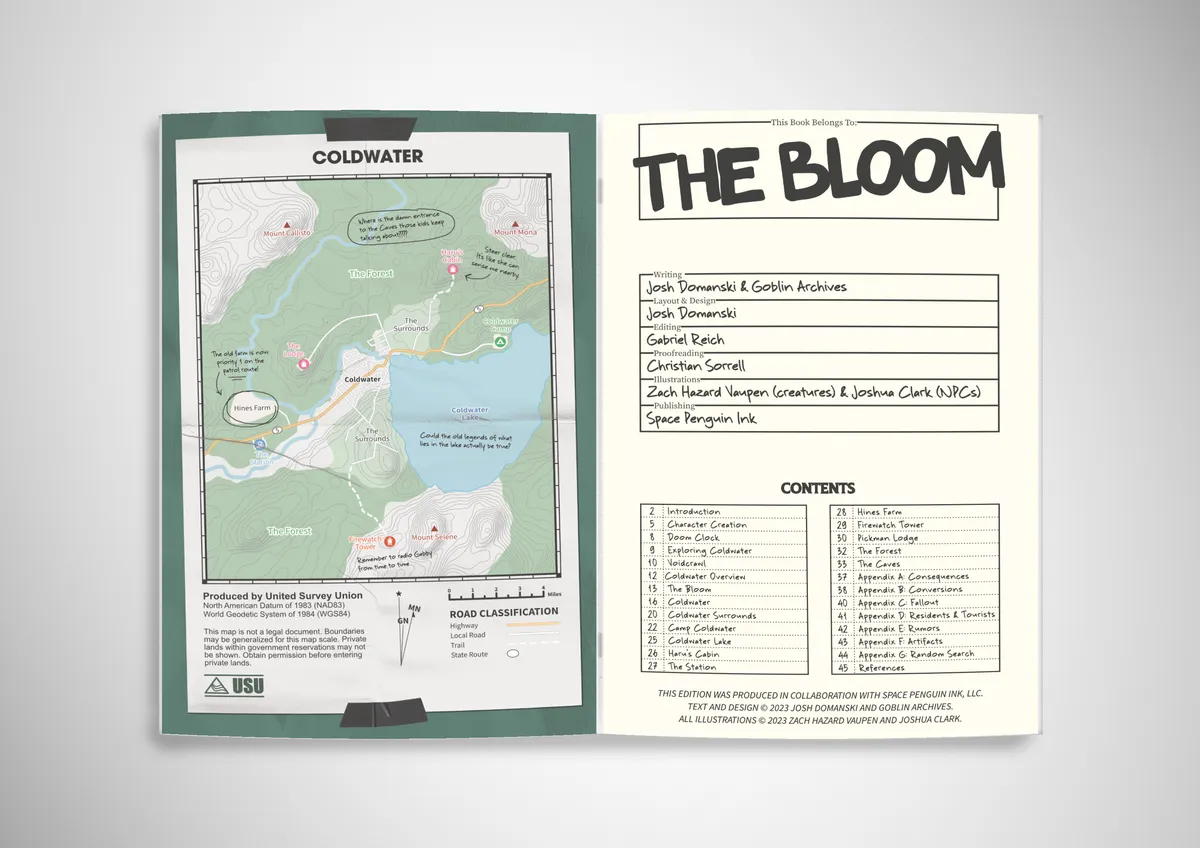
Josh D: The "fun" thing about writing for modern horror is that there's no shortage of influence within our own lives that can be pulled from. So we typically start with a solid theme and build outward from there. For example, Tangled is about the latent effects of improperly managed man-made hazards on the environment, The Bureau is about corruption in systems of power, and The Bloom is about problems that arise from holding onto an idealized version of the past the never existed. Take those concepts, give them a setting, and sprinkle in the supernatural and you've got yourself a scenario.
But nature even gives us inspiration for the horrors themselves. One could assume The Bloom's primary inspiration is from cordyceps, but the idea actually came from the "humongous fungus". The single largest organism in the world is a specimen of Armillaria ostoyae beneath the Malheur National Forest in Oregon. This one contiguous fungus covers an area of 3.7 square miles (9.6 km^2). The species itself causes root rot and is virtually unkillable unless you go full scorched earth on it, so just imagine how scary that could be if there was as sudden mutation that changed its behavior. We can also look at the bees from Hungry Hollow, which were inspired by vulture bees that eat carrion and use it to build their hives. Then of course there's the "human horrors" like we see in The Bureau, which represent an inner corruption that was made manifest, turning them into dangerous creatures.
So a lot of the conception of these ideas just starts from seeing or hearing about things that are either fascinatingly cool or existentially terrifying, making a note of it on my phone, then building out the concept into something gameable when inspiration strikes.
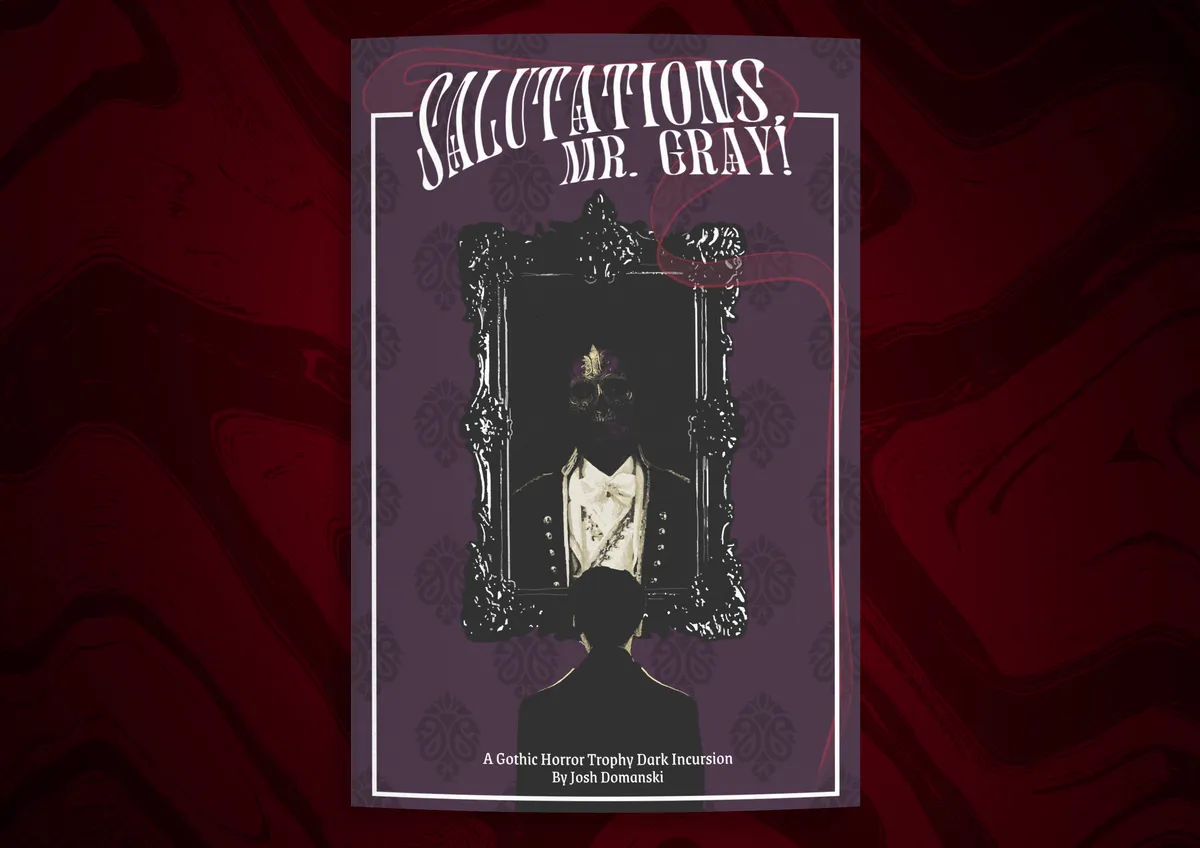
Mario: A few days ago you released an incursion for Trophy Dark, where does the Dorian Grey theme come from and why did you choose Trophy, as a system, to write this adventure?
Josh D: Trophy is one of my favorite systems. It really got me thinking in new ways about how a game can be run at the table and how they could be written, and I've been running it fairly regularly for a few years now (for those curious, you can actually find actual play one-shots I ran for both Dark and Gold on The Weekly Scroll).
One of my all time favorite tropes in horror is fucked up paintings. You see it in stuff like the Soulsborne games and the Alan Wake 2: Lake House DLC played around with the concept, but it's one of the classics. So a couple years back I had run my home group through Roots of Old Kalduhr, the "mega-incursion" in the Trophy Gold corebook. One of the players had the Drive to "destroy the work of Ajino the Debauched Painter", so our campaign ended up being focused pretty heavily on that, leading to the climax being a faceoff with a very fucked up piece of art in the dungeon. It's still something I think about all the time and have been looking for ways to introduce fucked up paintings of my own in my work.
When it comes to The Picture of Dorian Gray, I had known the work from it's reference in pop culture, but it was only about a year ago that I read the original novel for the first time. I was about half way through it when I knew I needed to find a way to adapt it to tabletop in some form. While Salutations, Mr. Gray! beat it to market, I had just finished the manuscript on a Mothership module called 'Til Death Do Us Part, which is being published by Silverarm. That was a very challenging piece of writing, but it was an attempt to take the Southern Gothic genre and smash it together with science fiction, so I was very much in the Gothic Horror mood and wanted to try and pull something else together.
Originally, I wanted to write a little Trophy collection, focusing on a handful of incursions in a city location, all directly inspired by works of classic gothic horror. But I was busy, so I ended up just sitting on the idea for a few months. In the interim, I ended up getting my hands on and running Die, Grave Robber, Die! by Michael Van Vleet, which is an "all-in-one" setup with rules for Trophy and a gothic horror incursion. I pretty much immediately thought "yeah, I want to make one of these", so I resurrected the Dorian Gray idea, as it was the most "complete" concept of that initial collection, and got to work pulling it together. This was right in the middle of drafting the Liminal Horror Deluxe Edition, so it served as a really nice palette cleanser to keep me sane haha.
The basic concept of Salutations, Mr. Gray! is that you're thieves hired to infiltrate the estate of Dorain Gray to steal his painting. This was the initial idea I had come up with, so it survived all the way through the process. As for the choice of Trophy, Dark specifically focuses on a descent into horror, where treasure hunters get steady more fucked up until they meet an inevitable fate. The Picture of Dorian Gray has a major theme of how societal values and individuals can have a profound influence on one's morality. So it was a match made in heaven, as this incursion will put you right in the middle of a gratuitous display of wealth and try and drag you down into its debauchery.
Mario: I really enjoyed reading you, right now I'm a bit obsessed with Trophy and seeing you bring out this project rooted in Trophy has got me really excited!
Although what I'm really excited about is the deluxe edition of Liminal Horror. Me and 2k other people are chewing our fingernails with impatience for the day to launch. hahaha!
So, Josh, what does this deluxe edition mean for the team and what does it mean for you as a designer and writer?
Josh D: Even back when I first joined on, Nick had been talking about ways to elevate Liminal Horror beyond the original zine, while sticking with its roots. It's no secret that we've been looking to Tuesday Knight Games and their work with Mothership for inspiration, so the Kickstarter for the MoSh boxset is kinda what kicked us into gear to put some more serious thought into what the future for LH looked like.
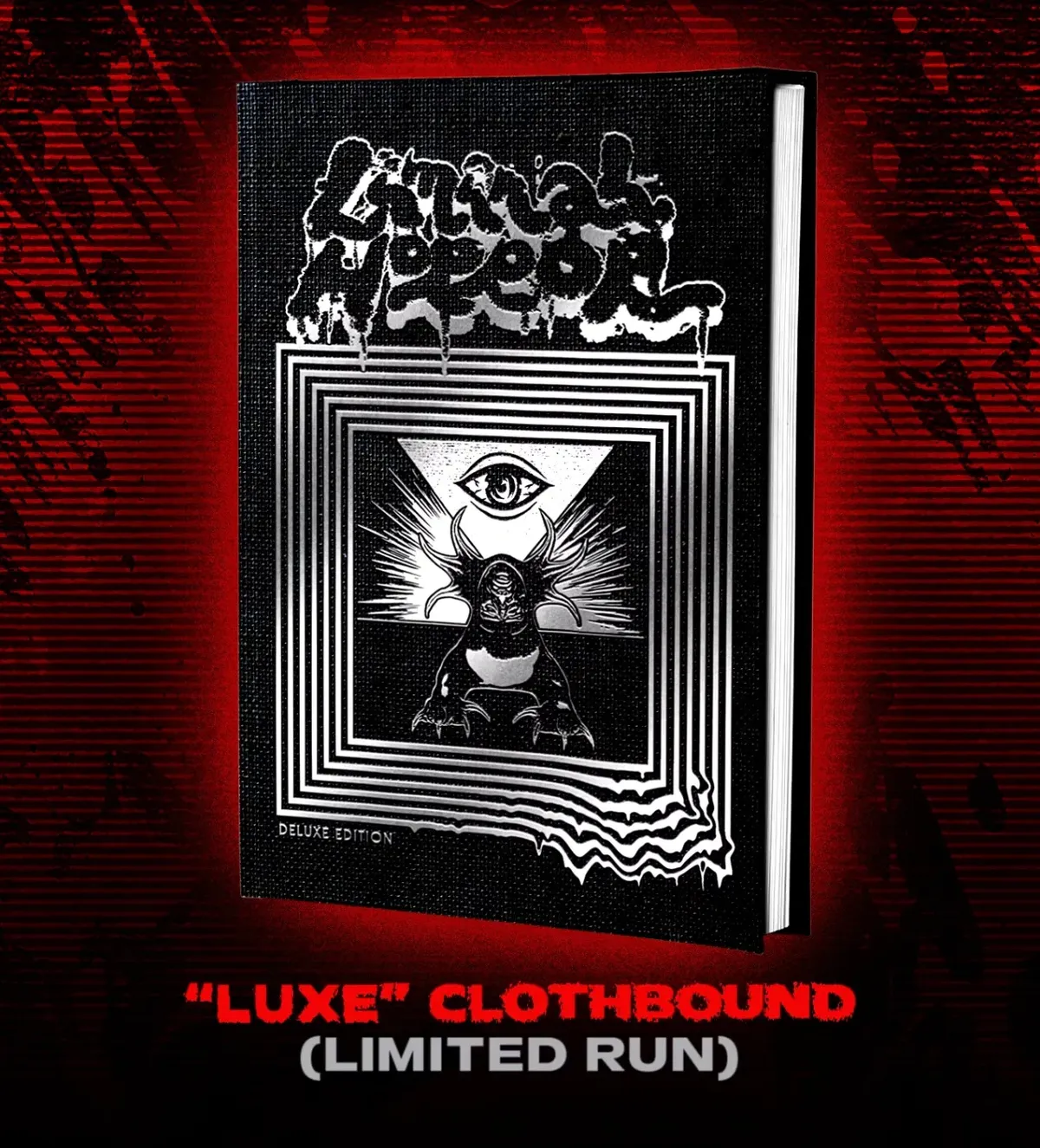
For some lineage, Liminal Horror is a hack of Cairn, which is technically a hack of Electric Bastionland. EB is one of my all time favorite RPG books, primarily because it's full of some incredible advice on how to run the game. So for the LHDE, the consensus was "let's make our version of that book". I love the zine form factor of the MoSh boxset, but even with the expanded content the system still has some holes that I really wish would have been included. So we made the choice to move to a hardcover so that our only limitations would purely be our ability to write the book.
So when we call this book "deluxe", our single most important goal was to deliver a book that supports actually getting the game to the table. We've taken the original 40 page zine and blown it up to what's looking like it's going to be over 300 pages once layout is completed. It's a bit funny to say "this 300 page book is a rules-lite game", but we very deliberately preserved the original parts of the system in the first section of the book, so it's still fully compatible with what has come before and you can learn the basics, roll characters, and get playing in 15-30 minutes.
Those additional 250+ pages support that design ideal of helping you get the game to the table. These include:
- Facilitator's Guide: Advice for running horror games (even beyond LH).
- Catalog of the Strange: Factions, monsters, Resonant Artifacts, and NPCs.
- The Haunted Pacific Northwest: A basic framework setting, giving you a handful of locations across the PNW that include places to visit, NPCs to encounter, and investigation threads to pursue.
- Appendices: Expanded content and modular rules to bolt on to your game. The biggest inclusion here is a series of "generic locations", where we did the boring stuff by giving basic details on a series of locations that you can then take and add the horror to.
On top of all this, about half way through we brough in Zach Hazard Vaupen as the official LH art director. He was always going to do the art for the book, and has had a huge impact on LH from the start, so it just made sense. So all the art in the book is coming from Zach and he's delivered some powerhouse pieces that are both striking and just plain unsettling to look at.
As for what it means to me personally, this is the culmination of over 2 years worth of work and is the single most important piece I've worked on since starting down the path of writing. While I've had my hands in the entire book, my personal baby is the Facilitator's Guide, which distills all of my advice on running effective horror. I'm pretty sure we've got some stuff in there I've never seen discussed in the same capacity in an RPG book.
But as a team, we're ecstatic with how the book has progress and we can't wait for folk to finally be able to get their hands on it.
Mario: It must be amazing to stand in your shoes, knowing how excited everyone is about the two years of work that went into creating the deluxe edition. By the time this post is released, Liminal Horror deluxe edition will probably have been fully funded within the first few minutes—I'd almost bet on it! But I’d love to know what has fascinated you the most about how this deluxe edition turned out. Whether it’s a specific section (I know the facilitation section is your baby, but within that section, what are you most proud of?), the layout of a particular page, or even an illustration that you think is mind-blowingly awesome. What are those things that truly fascinate you and make you proud of this edition?
Josh D: One of the sections I'm most proud of in the Facilitator's Guide is a breakdown on writing clues. It talks about the way Liminal Horror leverages clues, the types of clues you can deploy, how to write a good clue, and things to avoid when writing clues. We wanted to make sure we gave the readers the tools to create their own LH scenarios, which is often something sorely lacking in system books, but clues in particular are something I feel a lot of games take for granted and just expect the GMs to already have a good handle on. So now we've got as comprehensive of a guide as you could hope for.
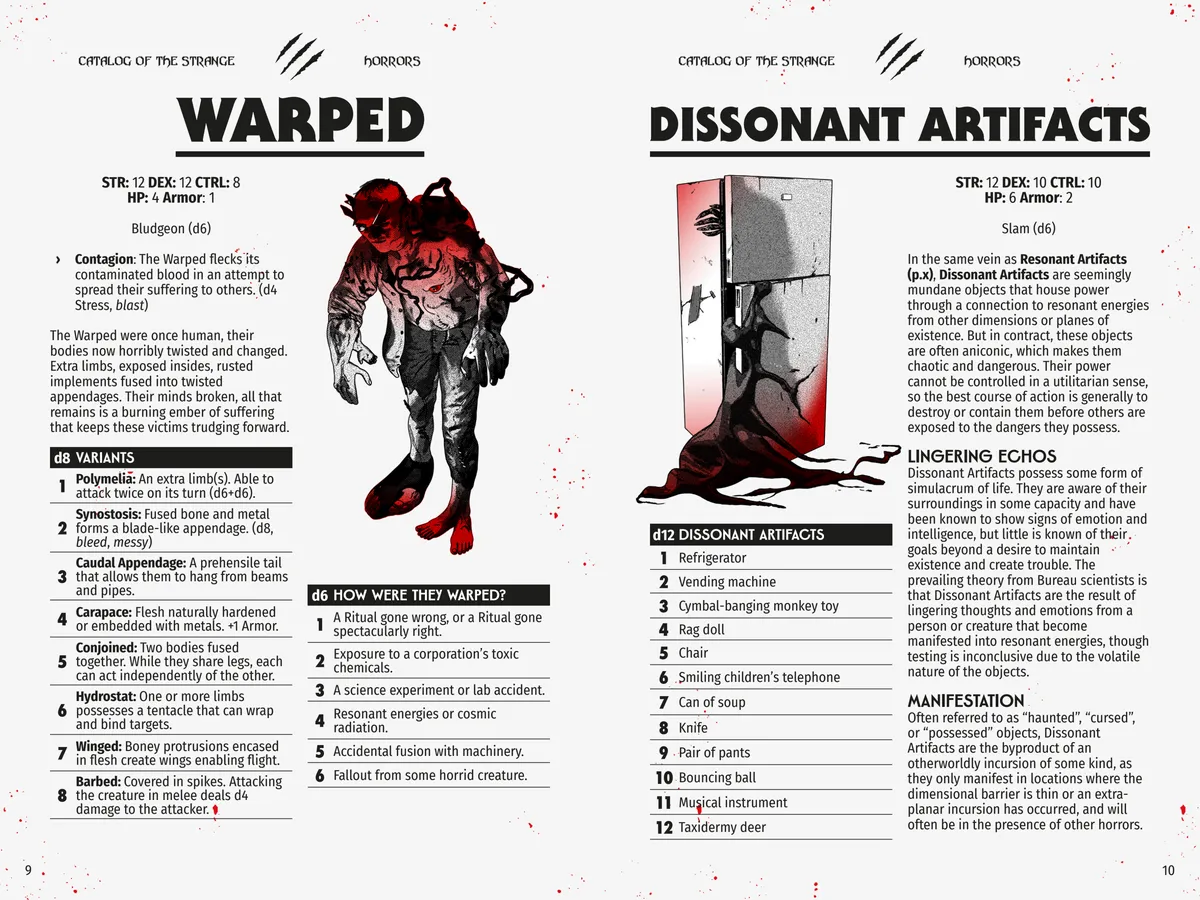
For the layout, we intentionally made the choice to keep everything straightforward and easy to digest. Everything is looking really nice so far, but I won't go out on a limb and say that we're breaking new ground here. However, one of the pieces I'm quite pleased with is how we've setup the monsters. You'll see some in the preview file I'll shoot over when we wrap up, but the goal was to maximize the "bang for your buck" on each page, while also making the monsters super easy to run straight from the page.
For art, Zach has been absolutely killing it. But for a quick shout out on one of the pieces, every good horror book needs a fucked-up deer and Zach killed it on a fungal deer for one of the scenarios.
Mario: It all sounds amazing, and I'm really excited to dive into that Facilitator's Guide! Once everything comes to fruition - meaning the campaign and all - and I , what do you envision for your future with Liminal Horror and beyond, in terms of other projects?
Josh D: For Liminal Horror, we have an amazing community of folks that keeps growing by the day. So first and foremost, we want to keep up the engagement with community. More writing seminars, another game jam, and maybe some community events of some form. The Horrors of the America jam is ongoing right now and that will culminate in a print on demand collection comprised of community submissions. I'd love to get a second one of those pulled together in the future.
On a project basis, I think we got the next year of releases roughly mapped out. I don't want to get too deep into details on the smaller stuff, but I'm really excited about what we've got in the works, including something that's going to be a bit of a departure from our usual affair in a manner I think folks will really get a kick out of. But I can talk about the next big project, though note that the future is in flux and there's always a chance plans will chance. So once the DE is wrapped and getting into folks hands, our next focus is creating our own reinvention of a bestiary. Just as the focus of the DE is getting the game to the table, we want to create a bestiary that supports actually getting the monsters to the table. So instead of just a bunch of monsters, you'll also get ready to run scenarios for these creatures, a setting to bind them all together, and a campaign framework, with everything being modular enough that they can be pulled out and used elsewhere as well.
Beyond next year, we'll see what happens. I don't expect a second edition to come anytime soon, if at all, but we have some ideas on ways that we can take the core in a new direction for a sequel system. But we've definitely got a few more modules in us, so you can expect support for LH for a good while.
Mario: Today in the morning I heard Yochai Gal say Liminal horror has already earned its own space by itself, after being one of Cairn's most successful hacks. I think he is right. Liminal Horror has become the most interesting and beloved modern rules-light horror game. I think the whole team has earned it. I always thought when Nick wrote the Hack he did something amazing, but it was when I first read The Bureau and you came into the equation along with Nick that the game reached another level. I congratulate you, you do a great job and yes, please, more writing workshops. It's great to hear from you. I'm excited about what's to come for the game and the adventures you can write. Josh where can people follow your work and find you?
Josh Domanksi: Your kind words are greatly appreciated!
For Liminal Horror, you can follow along on the Goblin Archives itch.io page and the Liminal Horror website. There you can find the link to our Discord server, which I'm on daily to answer questions and chat with folks. If you'd like to follow me personally, you can find my other projects at unenthuser.itch.io and I'm on BlueSky @unenthuser.bsky.social.
Mario | La Esquina del Rol: Thanks so much, Josh!
And that's all for today, folks! I hope you enjoyed this interview. Until next time!