An Interview with Sam Leigh

Sam Leigh is an award-winning TTRPG designer publishing under Blinking Birch Games. Author of Anamnesis and Outliers.
Mario | La Esquina del Rol: Sam Leigh! Welcome to La Esquina del Rol. First of all, thank you very much for accepting the invitation. I've been following your work for a while now, and I really like what you do. I have to admit that I'm very interested in your creative process for creating journaling games. You've written some very interesting games, and I hope we can talk about them during the interview.
Also, I know you work in developmental editing, proofreading, and more. That is a fundamental area of RPG design for me. I'm really glad to be able to talk with you and have the opportunity to share your ideas, thoughts, and other insights about RPGs with our community.
So, I'd like to start by talking about you. Who is Sam Leigh, and how did you get into the RPG world?
Sam Leigh | Blinking Birch Games: Thanks, Mario! It’s a delight to be invited to the newsletter.
“Who is Sam Leigh?” is quite a question! I’m from the US and have lived in many different states, but have spent the most time in Virgina, where I am now. I went to college to study neuroscience and psychology, and about halfway through my degree I started playing D&D 5e. I dove straight into DMing despite never having played before, but neither had anyone else in my group! This ended up being a great situation because we were all learning together.
After college, I worked as a research assistant in a couple human subject labs – first I guided infants and toddlers through tests at Penn State University, and then I worked on projects about auditory processing and space physiology at Dartmouth College (where I still work remotely, part-time). I continued to play D&D during this time, but in mid-2020 I learned about the wider world of indie TTRPGs by browsing on Kickstarter. The creativity and community immediately sucked me in, and by the end of 2020 I had put down D&D, picked up some indie systems, and started designing my own games.
I was attracted to TTRPG design for a variety of reasons, but mostly because it was an intersection of so many interests: theater, storytelling, logic puzzles, and writing all intertwined into this new hobby, which eventually grew into a career.
Mario: Oh! I didn't know you work in that field; it has been a surprise for me. But now that I think about it, it perhaps helps me understand a bit more about how you approach the design of your own games. In what way do you feel that your background as a psychologist has influenced the type of games you like to design?
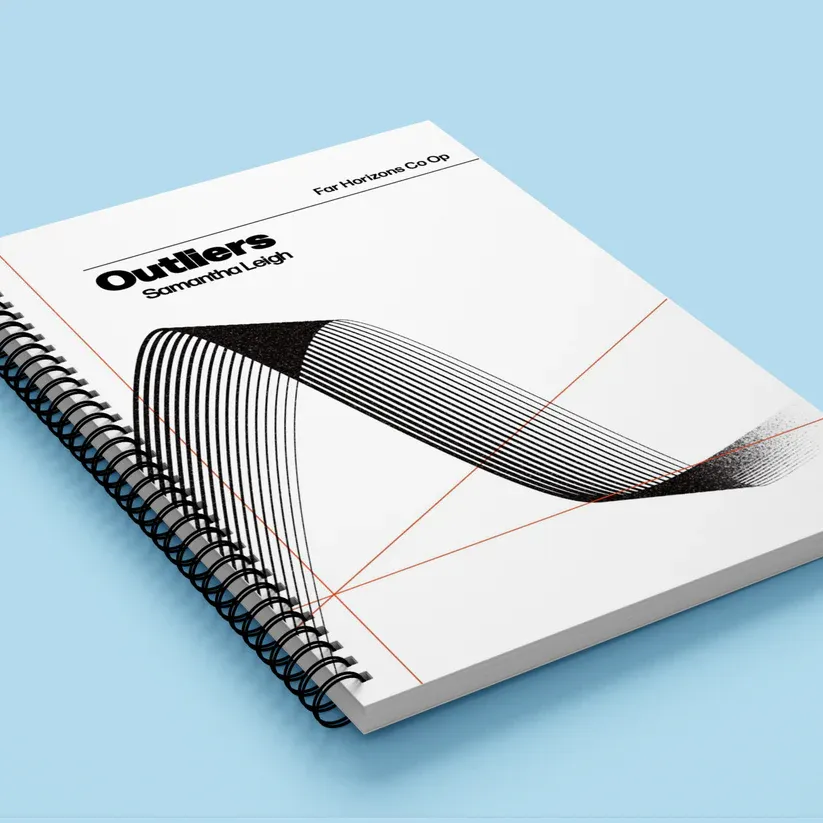
Sam Leigh: Well, it had a pretty major influence on Outliers! I was invited to be a guest writer for Far Horizon’s CoOp, and I wanted to challenge myself to design a game that included some of my history. So, I wrote one about being a research assistant. Outliers is a solo, absurdist Wretched & Alone game, where you play a research assistant in a very strange “human” research lab. It has a lot of Welcome to Night Vale’s horror-comedy. My main goal in writing the game was to show, beneath the absurdity, what a research assistant job actually involves. Almost every prompt in that game was directly inspired by tasks I’ve done in different labs.
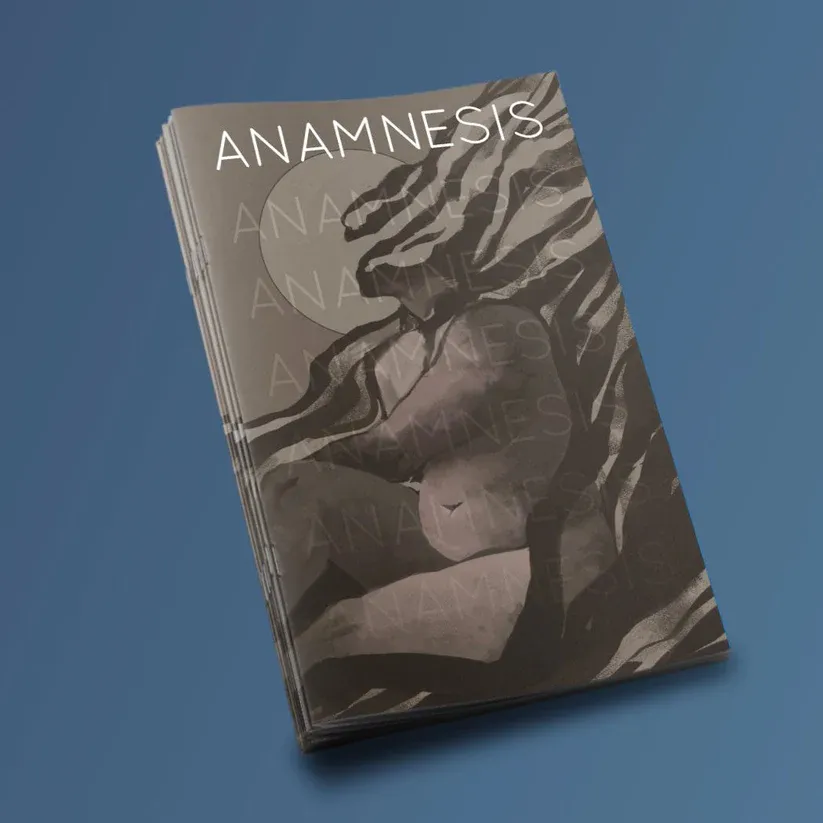
Aside from that, I think my background in psych and neuro tends to bleed into my games without my noticing. This happened when writing Anamnesis, a solo tarot game about waking up with memory loss and slowly learning who you were. A big piece of the game involves figuring out how to move forward – what is your opinion of yourself once you’ve learned your past? Do you still want to be the person you were, or do you try to change? In one of my psychology classes we talked about what happens when a person does something that conflicts with their self-perception (for example, someone who thinks of themselves as thoughtful and loyal, but then cheats on their partner). Typically, this conflict in self-perception is very uncomfortable. In many cases, this person might dismiss their actions with excuses, attempting to maintain their original self-perception. It’s always healthier, though, to accept the action as a part of you, and then strive to change your behaviors to embody who you wish to be. I never thought about it at the time of writing, but I later realized this is a major piece of Anamnesis.
Mario: Another thing I really admire about your games is the concepts you incorporate into each one. They are truly ingenious, and I think that, in a way, they form part of your identity as a game designer. What's your process for coming up with these interesting concepts for your games?
Same Leigh: Thanks! To be honest, I typically just focus on whatever themes are most interesting to me in the moment. I’ll start with the base concept for a narrative premise and allow it to shift around during the early stages of design. With Anamnesis, that original premise was a group game where each player starts with a blank character sheet, and the GM has their filled sheets – as players learn more about their characters, they slowly fill in their sheet. This, obviously, is nowhere near what Anamnesis turned out to be; I swapped to solo play with tarot cards very early in the design process, though the themes of memory loss and self-discovery continued.
I always start with the narrative, though, rather than the mechanics. I’ve never come at a game mechanics-first, and then later figured out what the narrative should be around those mechanics. Instead, there’s always a type of story I’m interested in exploring, and I attempt to develop mechanics that support and embody the story. In Death of the Author, for example, I wanted to tell a story of a character and author fighting for control – it wasn’t until later in the design process that I figured out the mechanic for taking control by re-writing the prompts.
Mario: Wow! I wouldn't have expected Anamnesis to start like that! That's very interesting! In this context, I would like to ask you what drew you to solo role-playing game design, and in particular, what design decision led you to make that turn with Anamnesis?
Sam Leigh: Part of what originally drew me to solo design, and what led to the pivot in Anamnesis, was that I was a new designer who wasn’t confident in making game mechanics. With solo games, you don’t have to worry about balance and communication between players, which made them seem easier to write at the time (I’ve learned a lot since then, enough to know that’s not always the case haha).
Since then, though, I’ve continued to find myself drawn towards solo design, and specifically the ways in which these games provide entertainment and evoke feeling without the help of other players. While all games are in communication with their players, solo games always feel more intimate – your writing is focused on just one person – and players have the chance to be indulgent and explore pieces of themselves that might be difficult in a group setting.
I recommend listening to my friend Iko's interview with Sam Leigh on the Lost Bay Podcast!:
Mario: Something I notice in your games is the use of tarot. I've been very interested in the use of tarot in roleplaying games lately. In fact, I am generally very attracted to the use of these and other board-game-related elements in game design. What brought you to the use of tarot in your game designs?
Sam Leigh: Tarot is incredibly evocative. Many solo games use oracle tables to move the story forward, but tarot itself serves as an oracle, allowing many different interpretations. It’s a great tool for inspiration – you can take meaning from the classic interpretation of the cards, or their name, or their art, and different decks inspire different stories. Even if you’re not familiar with tarot, there’s still enough to provide that spark of an idea. When I was designing Anamnesis, tarot not only seemed like a great story-building element, but also was thematic to the game, which deals with memory, discovery, and the self.
Mario: The truth is that the tarot works very well as an oracle and is a great tool for journaling games.
You use tarot in Anamnesis and Death of the Author, the latter a hack of your own game. I recommend both games to our Spanish readers.
But, I would like to talk about The World We Left Behind. This game came out of a commission with a ballet, right? what can you tell us about this game?
Sam Leigh: The collaboration with BalletCollective was one of the coolest things I’ve ever been part of. They reached out to me to be a Source Artist for their 2023 season, meaning I’d create a piece of art (in this case, a TTRPG) that would serve as the inspiration for the ballet. I worked with composer Phong Tran and choreographer Troy Schumacher to design a game with aspects they were interested in: abstraction, an artifact of play, multiple mechanical components, and the ability to play two-player.
This became The World We Left Behind, a game about astronauts exploring a planet and uncovering the mystery of what happened to the sapient species that used to call it home. During the game, you draw symbols on playing cards, which the other player interprets to create creatures, landscapes, and vestiges of the past. Phong and Troy played it together, and then Phong composed a piece of music and Troy choreographed a ballet to the track.
After the BalletCollective performance, I worked on a new edition of the game: many of the rules were edited, the game was expanded to allow 1-5 players, and I partnered with Helena Santana for the art and Sinta Posadas for layout. This new version was released in print near the end of 2024.
Mario: Wow! I never imagined something like that would be possible!!! I imagine it was a great collaborative experience. I want to digress and talk a little bit about your work editing TTRPGs. What was that experience like? A lot of people know your work as an editor, and I'm very curious about your experience with this job.
Sam Leigh: Editing has been a fantastic experience for me. When I edit, I think critically about the mechanics of the game and the message the text gets across to the reader, which in turn helps me with my own writing and design. I’ve found editing to be a very collaborative process – I’m always asking the designer questions about their intentions and preferences, and sometimes we have calls to discuss more complex changes. I’ve learned it’s not something I can do all day long (I would never try to make editing a full-time job), but it’s a great way to exercise a different part of my brain and help other designers lift up their work.
Mario: Editing is a very interesting job, as is translating. Both are a really important effort and give the final product what it needs for the audiences it was written for.
On the other hand, I'd like to know what we can expect next from you in terms of game design. What ideas are going through your mind that you can share with us?
Sam Leigh: There’s not a lot I can share at this stage, but I’m working on a new game that I expect to be larger in scope, and very different from my previous games. The idea has been rattling around my head for a couple years now and I’m finally dedicating some time this year to writing it. If you’re a fan of The Backrooms, or Annihilation, or Scavengers Reign, you’ll probably like this one.
Mario: I will be looking forward to it! And, I really hope your games finally make the jump to Spanish so our audience can learn more about your amazing games. On that note, where can our readers follow you and find out about your latest news? Because I'm sure more than one will be looking forward to your new release.
Sam Leigh: The best landing page is my Carrd: samleigh.carrd.co. From there, you can find links to all my socials, as well as to my games and editing information. I’m most active on BlueSky under the handle @GoblinMixtape, and my games can all be found at blinkingbirchgames.itch.io.
Thanks so much, Mario! I love the work you’re doing here, and I appreciate you inviting me!